Oceanic Peptides
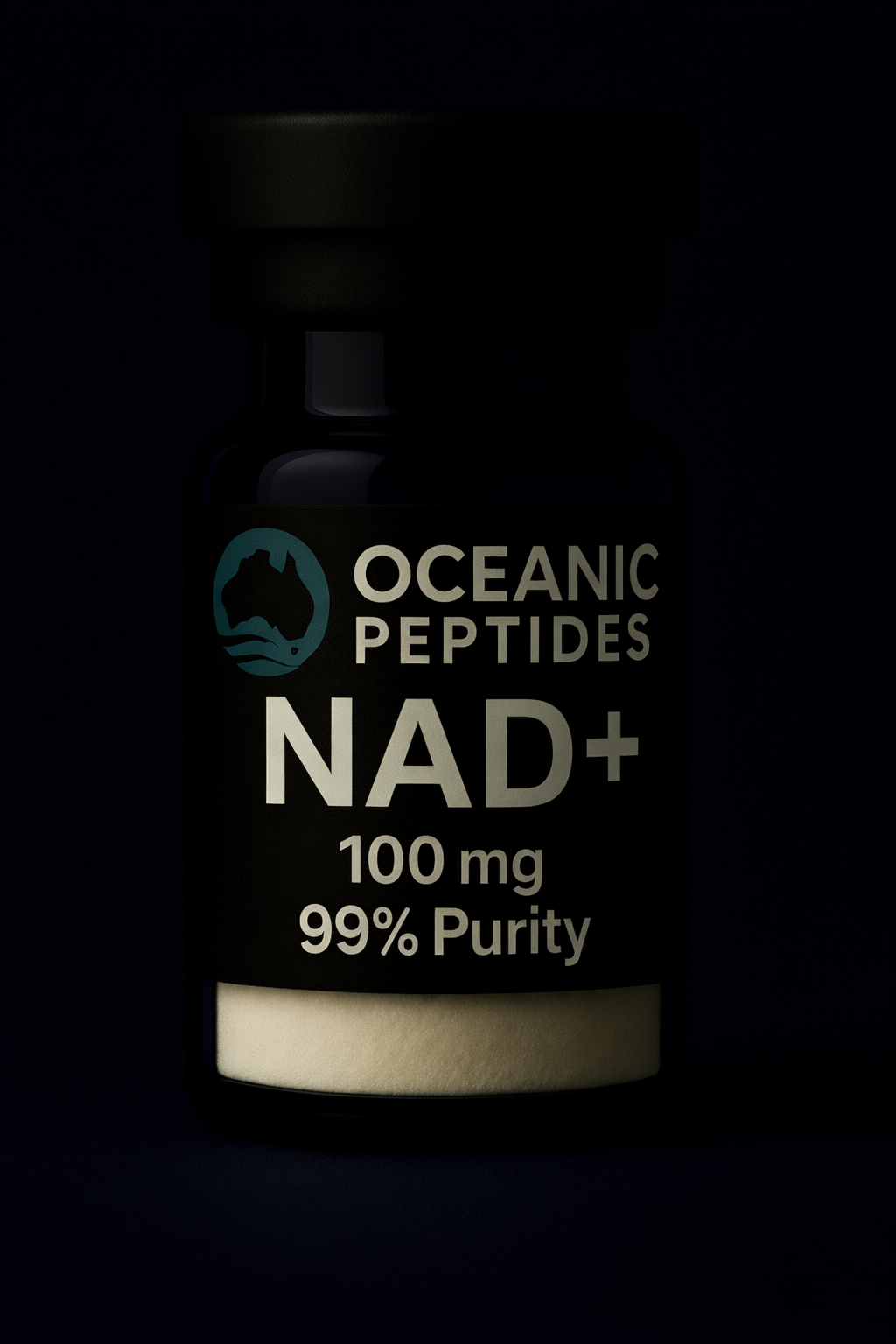
NAD+ (100MG)
NAD+ (100MG)
Couldn't load pickup availability
NAD+ – Research Coenzyme
NAD+ (Nicotinamide Adenine Dinucleotide) is a naturally occurring coenzyme found in all living cells and plays a fundamental role in cellular energy production and metabolic function. In laboratory research, NAD+ is widely studied for its involvement in redox reactions, mitochondrial activity, and cellular signaling pathways.
In research environments, NAD+ is commonly explored for its role in:
• Cellular energy metabolism and ATP production
• Oxidative-reduction (redox) reactions
• Mitochondrial function and efficiency
• DNA repair and cellular signaling mechanisms
• Age-related cellular research models
As a central regulator in metabolic and enzymatic processes, NAD+ remains a cornerstone compound in biochemical and longevity-focused research.
Each vial contains high-purity, research-grade NAD+, manufactured under strict quality standards to ensure reliability, stability, and consistency.
For research and laboratory use only. Not for human consumption.
Purity: 99% (HPLC verified)
• Form: Lyophilized powder
• Use: Research use only
• Quality: Third-party tested for identity and purity
STORAGE:
Before Reconstitution (Lyophilized / Powder Form)
Lyophilized peptides are much more stable than liquid peptides.
Recommended storage:
• Short-term (0–3 months): Keep in a refrigerator, ideally 2–8°C (35–46°F).
• Long-term (3+ months): Store in a freezer, preferably –20°C or colder.
Other tips:
• Avoid repeated temperature cycling (in/out of freezer).
• Keep the vial sealed tightly to protect from moisture.
• Store in the dark; peptides degrade with UV or sunlight exposure.
⸻
2. After Reconstitution (Mixed With Bacteriostatic Water or Sterile Water)
Once in liquid form, peptides become less stable.
Recommended storage:
• Always store in the refrigerator at 2–8°C.
• Shelf life depends on the specific peptide, but generally:
• 1–4 weeks in the fridge is common for many research peptides.
• For longer storage, freezing small aliquots is preferred.
Never refreeze the same liquid aliquot repeatedly—this can break down the peptide.
Share