Oceanic Peptides
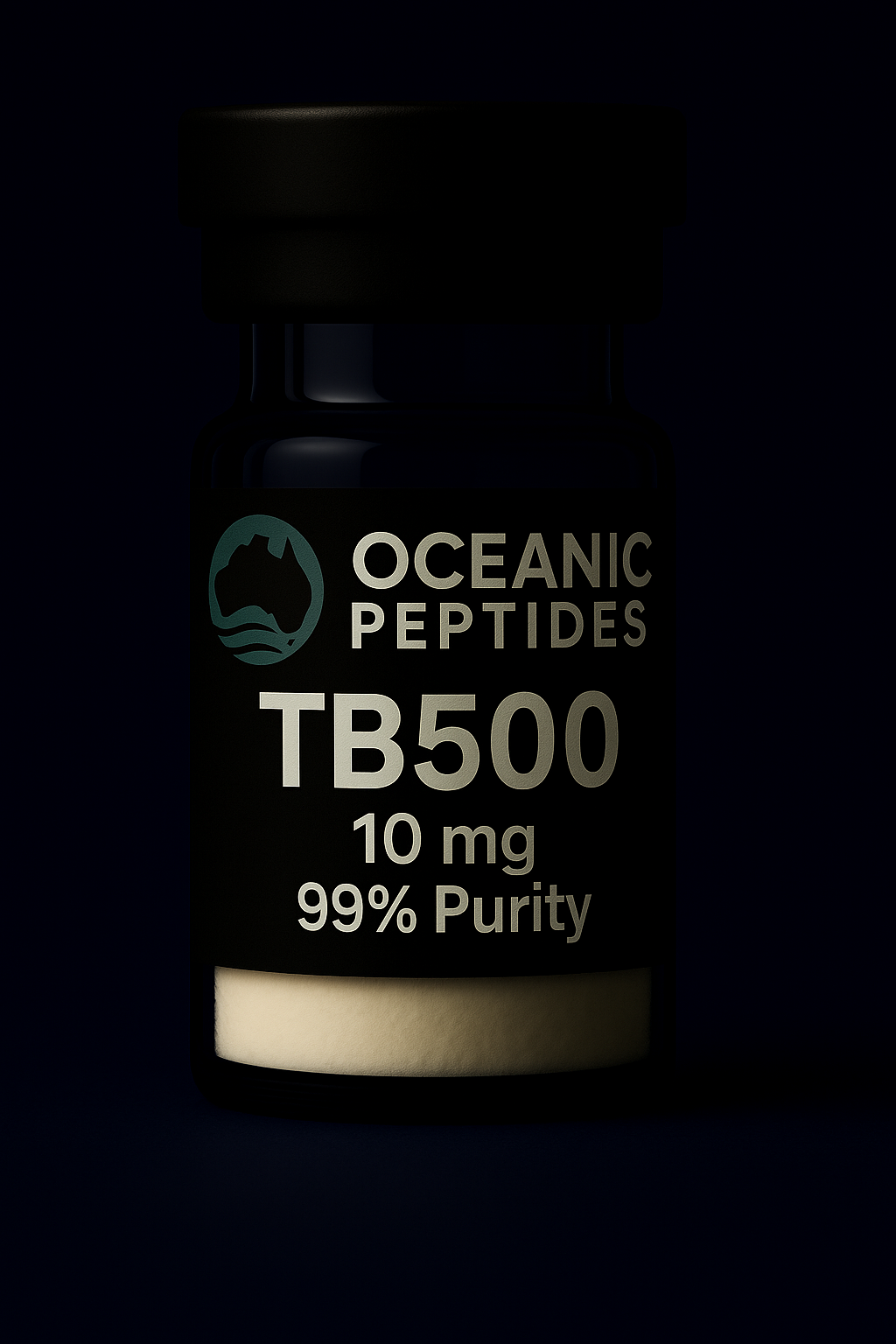
TB500 (10MG)
TB500 (10MG)
Couldn't load pickup availability
TB-500 10 mg | 99% Purity
Oceanic Peptides TB-500 is a synthetic peptide fragment modeled after Thymosin Beta-4, a naturally occurring peptide involved in a wide range of biological signaling processes. Due to its stability and structural consistency, TB-500 is widely utilized in laboratory research and experimental studies focused on cellular dynamics and tissue-related signaling pathways.
This 10 mg, 99% purity formulation is supplied in lyophilized (freeze-dried) powder form, ensuring long-term stability and precise handling for analytical and in-vitro research use.
Ongoing research applications commonly explore TB-500 in relation to:
• Cellular migration and signaling studies
• Structural tissue research models
• Cytoskeletal organization pathways
• Inflammation-related cell response mechanisms
• Vascular and angiogenic research frameworks
⸻
Product Highlights
• Compound: TB-500
• Concentration: 10 mg
• Purity: 99% (HPLC verified)
• Form: Lyophilized powder
• Use: Research use only
• Quality Control: Third-party tested for identity & purity
⸻
Purity: 99% (HPLC verified)
• Form: Lyophilized powder
• Use: Research use only
• Quality: Third-party tested for identity and purity
STORAGE:
Before Reconstitution (Lyophilized / Powder Form)
Lyophilized peptides are much more stable than liquid peptides.
Recommended storage:
• Short-term (0–3 months): Keep in a refrigerator, ideally 2–8°C (35–46°F).
• Long-term (3+ months): Store in a freezer, preferably –20°C or colder.
Other tips:
• Avoid repeated temperature cycling (in/out of freezer).
• Keep the vial sealed tightly to protect from moisture.
• Store in the dark; peptides degrade with UV or sunlight exposure.
⸻
2. After Reconstitution (Mixed With Bacteriostatic Water or Sterile Water)
Once in liquid form, peptides become less stable.
Recommended storage:
• Always store in the refrigerator at 2–8°C.
• Shelf life depends on the specific peptide, but generally:
• 1–4 weeks in the fridge is common for many research peptides.
• For longer storage, freezing small aliquots is preferred.
Never refreeze the same liquid aliquot repeatedly—this can break down the peptide.
Purity: 99% (HPLC verified)
• Form: Lyophilized powder
• Use: Research use only
• Quality: Third-party tested for identity and purity
STORAGE:
Before Reconstitution (Lyophilized / Powder Form)
Lyophilized peptides are much more stable than liquid peptides.
Recommended storage:
• Short-term (0–3 months): Keep in a refrigerator, ideally 2–8°C (35–46°F).
• Long-term (3+ months): Store in a freezer, preferably –20°C or colder.
Other tips:
• Avoid repeated temperature cycling (in/out of freezer).
• Keep the vial sealed tightly to protect from moisture.
• Store in the dark; peptides degrade with UV or sunlight exposure.
⸻
2. After Reconstitution (Mixed With Bacteriostatic Water or Sterile Water)
Once in liquid form, peptides become less stable.
Recommended storage:
• Always store in the refrigerator at 2–8°C.
• Shelf life depends on the specific peptide, but generally:
• 1–4 weeks in the fridge is common for many research peptides.
• For longer storage, freezing small aliquots is preferred.
Never refreeze the same liquid aliquot repeatedly—this can break down the peptide.
Important Notice
This product is intended for laboratory and research use only. It is not approved for human or veterinary use and is not intended to diagnose, treat, cure, or prevent any disease.
Share